Home/Elements

Page Heading

Sticky Sub Nav
Buttons - CTAs
CTA bar with button

Questions about our research?

Image | Text Section

What is Angelman syndrome? (AS)

Angelman syndrome (AS) is a rare genetic condition that affects the nervous system, leading to challenges with movement, balance, and communication. It is caused by changes to chromosome 15, which impact brain function.

Video | Text Section

What is Angelman syndrome? (AS)

Angelman syndrome (AS) is a rare genetic condition that affects the nervous system, leading to challenges with movement, balance, and communication. It is caused by changes to chromosome 15, which impact brain function.

Full bleed Photo | Text

We start with the barrier,
not the grant.

FAST looks beyond individual projects to understand what is preventing promising discoveries from moving forward, whether that is missing evidence, a research resource no single lab can build alone, a gap in funding, or a development path that does not yet exist.

Then, we help build what is needed to overcome that barrier.

That approach shapes every research investment FAST makes.

Top text with CTA / bottom 3 stats

Advancing Hope, Driving Discovery

Translating science into life-changing therapies

At FAST, our mission is simple yet urgent: to accelerate meaningful therapies and, ultimately, a cure for Angelman syndrome. We believe in harnessing scientific rigor, community strength, and bold partnerships to transform research into real-life outcomes for families. With every grant, collaboration, and trial, we move closer to turning hope into impact.

0

people worldwide estimated to be living with AS

0

distinct therapeutic programs initiated

0 million +

invested since 2011

Left text with CTA / Right 4 grid stats

Looking into the future

People living with Angelman syndrome share a mutation in the 15th chromosome. People with these chromosomal changes do not produce any, or remotely enough, of something called UBE3A—which is a protein involved in brain functioning that helps us walk, talk and perform many other everyday tasks.

As a result, children and adults with AS typically have balance issues, motor impairments and can have debilitating seizures. Disruptive sleep is often a serious challenge. Some never walk. Most do not speak. Individuals with AS have a normal life expectancy, but require continuous care and are unable to live independently.

This is life today for people living with Angelman syndrome. But it won’t be for long.

Scientists believe that AS is now the neurogenetic disorder with the greatest potential to be cured. FAST is the reason why, and the force making it happen.

FAST was founded by a group of determined parents

0

Investments through 2024 in research grants and mission-aligned investments that advance discovery, development, and clinical enablement.

$ 0 M

FAST invests 92% of every donation directly towards research and programs.

0 %

Each year, hundreds of volunteers show up with their time and talent to help us raise funds and awareness towards our mission.

0 +
Left photo gallery / right text/3 stats below

What is Angelman syndrome?

Angelman syndrome (AS) is a rare neurogenetic disorder that is estimated to impact about one in 15,000 people, or approximately 500,000 individuals worldwide.

Lorem Ipsum Delore
0
Lorem Ipsum Delore
0
Lorem Ipsum Delore
0
Section nav on side with buttons

What Makes Our Research Model Different

We fund the critical steps between discovery and development

Promising discoveries often need additional testing and validation before they are ready for therapeutic development. FAST funds that work, helping researchers build the evidence needed to decide what should move forward.

We build the resources researchers cannot build alone

Some of the resources needed to advance Angelman syndrome research are too complex or costly for a single laboratory to create on its own. FAST helps develop shared tools and resources that researchers can use across studies, giving the research community a stronger foundation for evaluating findings and determining what should move forward.

We invest where traditional funding falls short

Promising research does not always fit the priorities or timelines of government grants and industry investment. FAST steps in when support is missing, helping researchers answer critical questions and generate the evidence needed to move an approach forward.

When an established development path does not exist, FAST may help create one. In 2024, FAST established AS²Bio, a drug development accelerator designed to advance promising science through venture philanthropy.

We bring the right expertise together

Complex research challenges rarely sit within one area of expertise. FAST brings together leaders across science, medicine, and industry to examine important questions from multiple perspectives and make stronger decisions about what should move forward.

Bringing those perspectives together helps FAST make stronger research decisions and connect promising approaches with the expertise they need to advance.

We fund the critical steps between discovery and development

Promising discoveries often need additional testing and validation before they are ready for therapeutic development. FAST funds that work, helping researchers build the evidence needed to decide what should move forward.

A Model Built for Impact

0 M+

invested in research and mission-aligned initiatives

0 +
research grants
0
active programs in the Angelman syndrome drug development pipeline
0
FAST-funded programs in the pipeline
Center Aligned Carousel
Home/Elements

FAST’s Research Model

FAST advances Angelman syndrome research by funding critical gaps, building shared tools, and accelerating promising science toward treatment.

How FAST Advances Angelman Syndrome

Icon with rollover text / no CTA

What are the symptoms of
Angelman syndrome?

Delays in development

Delays in development, typically noticed by one year of age.

Limited or no verbal speech

Limited or no verbal speech, and primarily use other methods to communicate like gestures, signs, vocalizations, and communication systems.

Balance and coordination difficulties

Balance and coordination difficulties UBE3

Unique behaviors

Unique behaviors, with frequent laughter and happy appearance being common. Many people living with AS are highly social.

Seizures

Seizures, typically starting in early childhood, and vary in type and severity.

Sleep difficulties

Sleep difficulties, including troubles falling asleep and staying asleep
Icon with rollover text / CTA on rollover

What are the types of Angelman Syndrome?

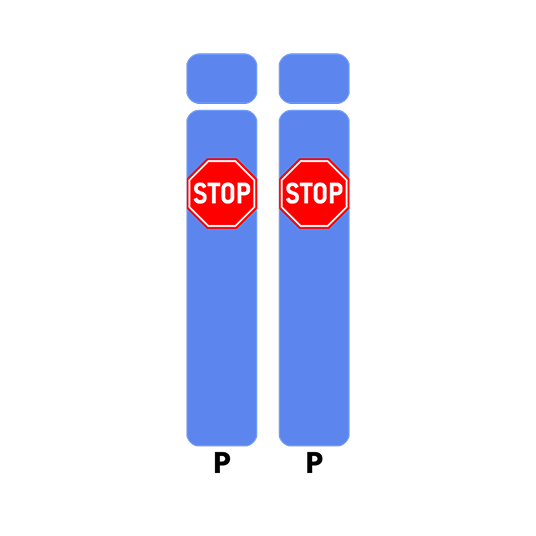
There are multiple different mechanisms or genetic differences that can result in the absence of UBE3A protein. In AS, we call these different genetic mechanisms “genotypes.” Knowing your loved one’s AS genotype is important. While each individual living with AS is unique, individuals living with the same genotype may have certain characteristics in common.

Each genotype has a different chance to be inherited. Finally, many clinical trials have genotype in their inclusion criteria for enrollment.

Neurotypical*

*For comparison, not a genotype
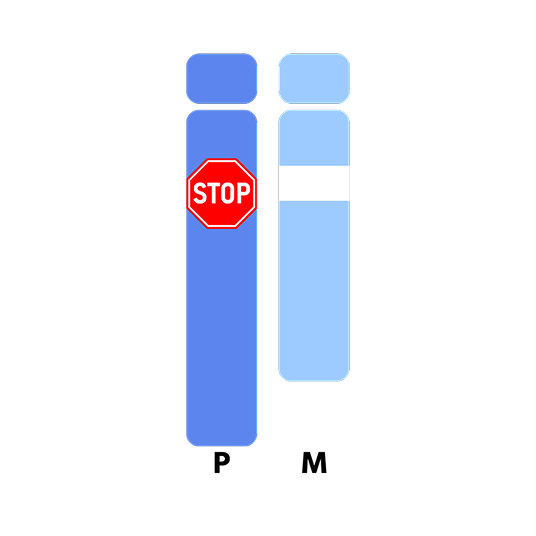
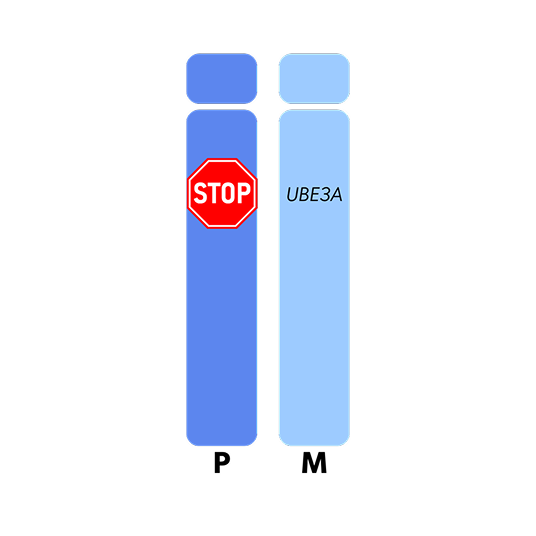
In neurotypical individuals who do not have Angelman syndrome, the UBE3A gene from the egg is turned on in neurons, while the UBE3A gene from the sperm is turned off.

Deletion

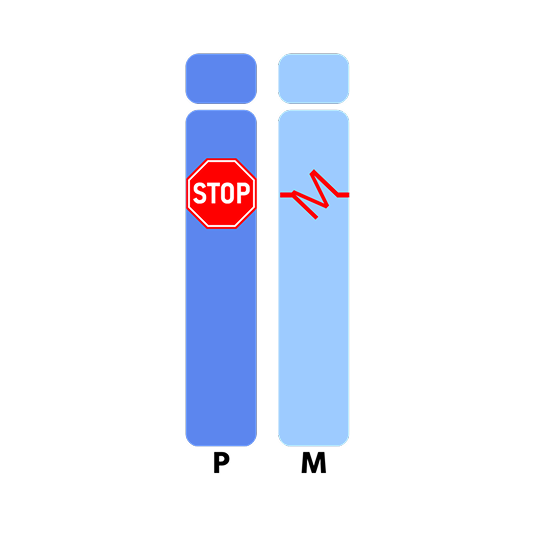
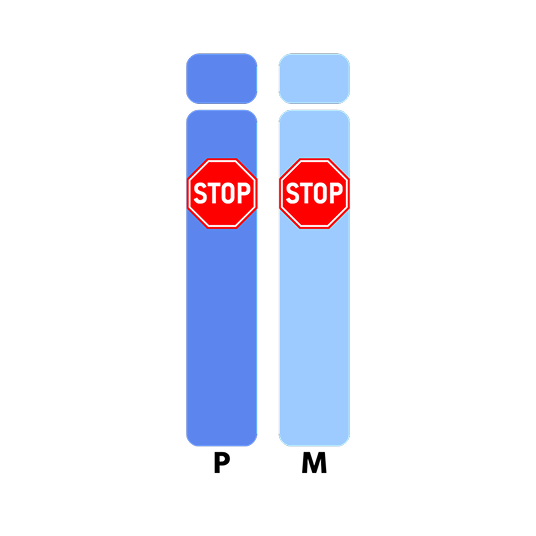
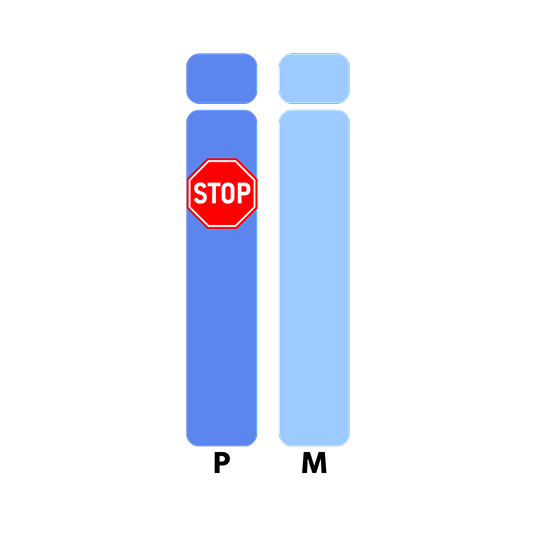
The most common cause of Angelman syndrome is a deletion, or missing section on the chromosome 15 that came from the egg. This missing section includes the UBE3A gene plus about 10 other genes. When the maternal UBE3A gene is missing and the paternal UBE3A gene is turned off, no UBE3A is made in the neurons.
Learn more about Deletion AS

Mutation

Mutations within the UBE3A gene from the egg cause about 10-15% of AS. A mutation is a difference or variant within the DNA that results in no UBE3A protein or UBE3A protein that is less functional or nonfunctional.
Learn more about Mutation AS

Uniparental Disomy (UPD)

UPD AS happens when both copies of chromosome 15 came from the sperm. Because the paternal UBE3A gene is always turned off in neurons, when both copies of chromosome 15 come from the sperm, both UBE3A genes are turned off, and no UBE3A protein is made in the brain.
Learn more about UPD AS

Imprinting Center Defect (ICD)

An imprinting center defect (ICD) is when the maternal imprinting center does not work correctly, and as a result the maternal UBE3A gene is incorrectly turned off. Because the paternal UBE3A gene is always turned off in neurons, an ICD on the maternal chromosome 15 results in no UBE3A protein being made. ICDs can be caused by a deletion of the AS imprinting center or an error at the AS imprinting center.
Learn more about ICD AS

Mosaic

When the genetic difference that causes AS occurs after fertilization, during the development of an embryo, the person lives with Mosaic AS. A person living with Mosaic AS has some cells that make UBE3A and some cells that do not make UBE3A in their body..
Understand more about Mosaic AS
Center aligned header with button CTA

Life Expectancy of Angelman Syndrome

Many individuals living with Angelman syndrome have a typical lifespan, but there are factors associated with Angelman syndrome that could potentially impact a person’s lifespan. Angelman Syndrome Life Expectancy has more information about our current understanding of life expectancy in AS.

Left aligned header with button CTA

Is there a cure or treatment for Angelman Syndrome?

Currently, treatments for Angelman syndrome are generally targeted to the symptoms each individual is experiencing. For example, individuals experiencing seizures should receive treatment(s) directed at reducing or eliminating the seizures. In 2022, a consensus statement on care in AS was published, offering valuable guidance to health care providers about managing symptoms and preventative care for individuals living with Angelman syndrome.

There is currently no cure for Angelman syndrome. However, research is actively progressing, aimed at developing potential therapeutics to improve symptoms and addressing the underlying cause of AS, the missing UBE3A protein in the brain.  The Drug Development Pipeline provides information on potential therapeutics that are still in early stage development as well as current ongoing clinical trials.

2 Column - Text only with line CTA

Research, drug development, and clinical trials

Option 3: Research model or Translational research

At the core of FAST’s mission is a commitment to bring scientific and therapeutic advancements from benchside to bedside, as quickly and safely as possible. Learn more about FAST’s current grants and research priorities

Option 4: Clinical Trial Finder or Trials & Studies

Interested in finding clinical trials and observational studies? Clinical trials are research studies designed to test whether a specific potential treatment or device is safe and effective at treating a condition or symptom.

Option 1

At FAST, we know we need as many therapeutic options as possible. To make it easier to understand how we think about therapeutic development, we’ve developed the Roadmap to a Cure, as a way to think about the different potential approaches to treating AS.

Option 2

Want to learn more about the development of potential treatments for Angelman syndrome? The Drug Development Pipeline is an interactive tool that can be used to see an overview of potential Angelman syndrome therapeutics, or enable a deep dive into a specific program or clinical trial.

4 column image cards with CTA's

Resources for Angelman Syndrome

Meet with Niki

Questions about AS genetic testing or a test report? Wondering about chances for your family? Interested in understanding your loved one’s genotype and what it means for clinical trials? Schedule a free conversation with FAST’s certified genetic counselor.

Meet with Niki

New to Angelman syndrome or to FAST? If you are new to the diagnosis of Angelman syndrome, there are two things you should know—you are not alone and THERE IS HOPE. Register with our New to FAST program to receive resources and connections. FAST is a big community, here to surround you with love, support, and strength.

Meet with Niki

There are so many ways to support FAST and our mission to —whether it’s your time, talent, or treasure, we encourage you to join in a way that inspires you.

Meet with Niki

Join our community and learn all about current clinical trials and upcoming potential therapeutics as FAST hosts the biggest science and drug development symposium every November. Or make new friends and support a local event for a great cause at a CAN fundraiser. Learn about upcoming FAST events.

3 column top photo with arrow CTA

Continue Exploring FAST Research

Translational Research →

Explore the science, tools, and research infrastructure helping advance Angelman syndrome research.

Drug Development →

Learn about the Angelman syndrome therapeutic pipeline, development landscape, and roadmap to future treatments.

Resources & Publications →

Browse publications, educational tools, bioresources, and funding opportunities for researchers and collaborators.

FAQ - Plus sign expand

Frequently Asked Questions

Most of the time, no. Angelman syndrome is most often caused by a brand new genetic change that happened prior to conception and is not inherited from a parent. However, some genotypes have a higher chance to run in the family and testing the parents may be recommended. If you have questions about whether AS runs in your family, reach out to FAST’s genetic counselor

Currently, the diagnosis of Angelman syndrome is made based using genetic testing. Genetic testing for AS can be complicated–it typically requires more than one test to confirm the genotype or to rule out the condition. Learn more about genetic testing in Angelman syndrome

Yes. Every person living with Angelman syndrome is unique in what symptoms they experience and in how they learn and develop. Knowing the genotype can provide some information on what to expect, but even within a genotype, individuals can vary in their abilities and medical issues.
For example, individuals living with Deletion AS have the highest chance to have seizures. However, even within Deletion AS, some individuals may never have a seizure, some individuals may only have a seizure once with a fever, some individuals have frequent seizures that are well-controlled with medicines, and some individuals have difficult to control seizures.

FAST’s mission is simple: Cure Angelman syndrome. As the largest non-governmental funder of Angelman syndrome research in the world, our goal is to drive forward transformative research and development programs as quickly as possible for those living with Angelman syndrome — regardless of age or genotype.
SOC and therapies pageYes. Every person living with Angelman syndrome is unique in what symptoms they experience and in how they learn and develop. Knowing the genotype can provide some information on what to expect, but even within a genotype, individuals can vary in their abilities and medical issues. For example, individuals living with Deletion AS have the highest chance to have seizures. However, even within Deletion AS, some individuals may never have a seizure, some individuals may only have a seizure once with a fever, some individuals have frequent seizures that are well-controlled with medicines, and some individuals have difficult to control seizures.

There are so many ways to lean into this effort—whether it’s your time, talent, or treasure, we encourage you to join in a way that inspires you.

  • Advocate
  • Learn
  • Participate
  • Fundraise
  • Influence

Yes! There are ongoing clinical trials to test the safety and effectiveness of several different potential treatments for AS happening right now. There are also several other potential therapy approaches that are in earlier stages of development, meaning that they are still being tested in cells and animal models. Visit the Drug Development Pipeline to learn more.

In AS, the unique nature of the UBE3A gene offers a promising opportunity for potential therapies. Due to UBE3A’s imprinting, individuals living with AS usually have a functional paternal copy of the UBE3A gene. This presents an exciting possibility: the paternal UBE3A gene could potentially be “turned on” to enable the production of UBE3A protein. As a result, there are therapeutic approaches that could address the underlying cause of AS that may not be possible in other similar genetic conditions. Traditional strategies used in genetic disorders, such as gene replacement therapy or enzyme replacement therapy, remain potential therapeutic options as well.

News - Categories / no CTA

Latest News

Full Photo Column with button CTA

Take Action

Fundraise

Lorem ipsum dolor sit amet, consectetur adipiscing elit.

Advocate

Lorem ipsum dolor sit amet, consectetur adipiscing elit.

Participate in Research

Lorem ipsum dolor sit amet, consectetur adipiscing elit.

Two Column sign up form with text

This is a good place to start.

Stay Connected

Lorem ipsum dolor sit amet consectetur adipiscing elit.

Join the Community

The FAST community is incredible. We rally around each other through the ups and downs of the Angelman syndrome journey, while fighting and advocating for our loved ones living with Angelman syndrome.

Meet the community to find answers, support, resources, and more from trusted information and from people who walk in the same shoes as you.

Two Column Video with Text

A Message from the Community.

Hear from families who have been in your shoes and what their advice is to you.

Top half photo column with line CTA

Find an Event

Join an in-person event near you!

November 5–7, 2026

FAST Global Science Summit & Gala, Orlando, FL

February 15, 2027

International Angelman Day, Global Event

March 10–11, 2027

Angelman Syndrome Congressional Advocacy Day, Washington, DC

Centered Text and button CTA with background image

Request Educational Resources

Help spread education and awareness within your family and local community. From
sharing your diagnosis to educating schools, therapists, and clinicians, our resources
can help build knowledge for those in your loved one’s life.

Left photo / right text with button CTA with background image

Questions about Clinical Trials?

Lorem ipsum set delore.

Left photo right text scroll testimonial

Moments of Hope by a
Team Who Gets It

Section Nav Tabs on top with underlines

Ready to go? Get Involved today.

Become an Advocate

FAST and the Angelman Syndrome Foundation (ASF) have partnered to strengthen grassroots advocacy efforts across the Angelman syndrome community. Together, they launched Hope in Action: Progress through Advocacy to mobilize families and supporters around a shared mission. This initiative encourages building relationships with state, local, and federal policymakers to advance meaningful policy change. By using their stories, FAST and ASF aim to amplify the community’s voice and drive progress that improves lives—both with work depending on growing our network.

We need more advocates to keep forward, get involved, and help drive change for every individual and family impacted by Angelman syndrome.

Participate in Research

Fuel our Pipeline

In rare diseases, the playbook is different. We’re not just funding research; we’re building the pipeline ourselves. This is patient-driven progress, and philanthropy is what powers it.  Every single dollar raised has purpose and impact. These dollars move potential or investigational Angelman syndrome treatments closer to reality. 

FAST offers multiple ways to give and raise funds to support our mission. Find your way! 

3 column - text only with arrow CTA

Keep Learning

Latest Angelman Advocate News

Advocacy
Resources

Our Commitment to Advocacy

History + Timeline

Program History

In early 2012, FAST began funding Scott Dindot’s laboratory at Texas A&M University to understand the mechanism by which the UBE3A-antisense transcript (UBE3A-AS) silences the paternal UBE3A allele, why it is only silenced in neurons, and how that process may be leveraged as a potential therapy for AS. In late 2017, the Dindot laboratory identified an investigational ASO that, through preliminary studies, was shown to interfere with the imprinting mechanism of the paternal UBE3A allele in neurons, and unsilenced the gene. FAST wanted to ensure that the development of this program moved forward in the most expeditious, safe, and detailed manner possible, with the primary goal of moving into a human clinical trial if preclinical studies supported further investigation. To do this, FAST formed GeneTx Biotherapeutics LLC (GeneTx), a for-profit limited liability company, singularly focused to develop an investigational ASO for potential future use in a Phase 1/2 clinical trial for individuals living with AS.

Key Researchers:

Lorem Ipsum

Lorem Ipsum

Timeline:

2012

FAST began funding Scott Dindot’s laboratory at Texas A&M University to understand the mechanism by which the UBE3A-antisense transcript (UBE3A-AS) silences the paternal UBE3A allele, why it is only silenced in neurons, and how that process may be leveraged as a potential therapy for AS.

2016

FAST created a for-profit company called GeneTx Biotherapeutics LLC specifically for one purpose: to accelerate the development of an investigational antisense oligonucleotide drug for the potential treatment of AS.

2020

The clinical trial was initiated, making this FAST-backed program the first potential disease-modifying therapy in human clinical trials for Angelman syndrome.

2022

FAST announced that the company Ultragenyx Pharmaceuticals had exercised its option and closed on its acquisition of GeneTx Biotherapeutics LLC, a biotechnology company founded by FAST.

What are you looking for?

Find information on Angelman syndrome, research, clinical trials, resources, and ways to get involved.