Angelman Syndrome: UPD
The Uniparental Disomy (UPD) genotype affects ~5% of individuals living with AS

What it means
There are two paternal copies of chromosome 15 and no maternal copy.

How common is it
About 5% of individuals living with AS have UPD.

Is it inherited?
Usually no. In most families, it occurs randomly.
What is UPD AS?
In uniparental disomy (UPD), a child receives both copies of a chromosome from one parent instead of receiving one copy from each parent.
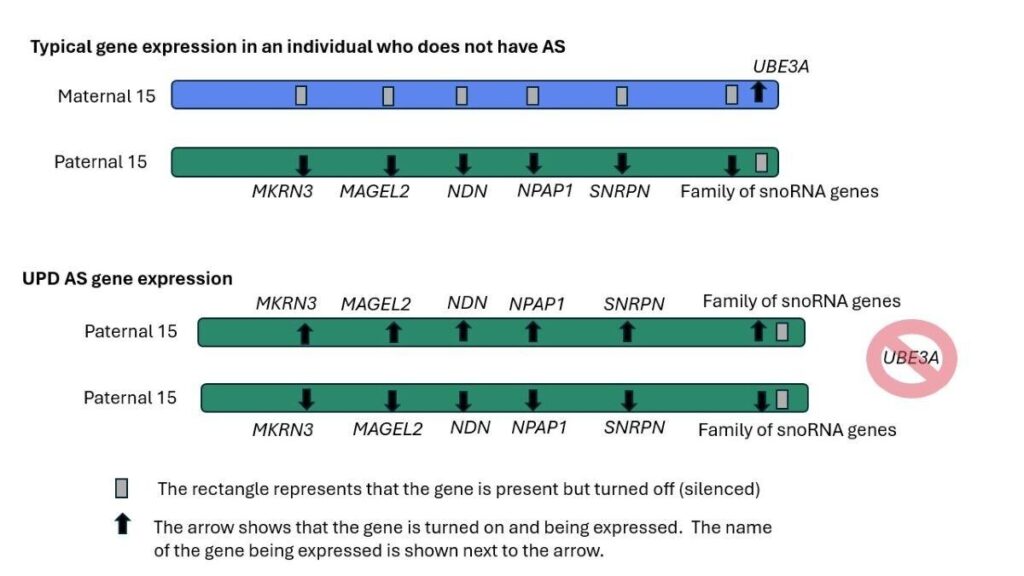
In UPD AS, both copies of chromosome 15 come from the father. In brain cells, the copy of the UBE3A gene from the father is normally switched off. So, when both chromosome 15 copies are paternal, both UBE3A genes are switched off in the brain. This results in not enough UBE3A protein in the brain.
A simple way to think about it.
Both copies of chromosome 15 come from the father, so both UBE3A genes are naturally silenced in the brain.
That is why paternal uniparental disomy (UPD) causes Angelman syndrome
What can UPD mean for my loved one?
Unlike Deletion AS, no DNA is missing in UPD AS. This means people living with UPD AS may have less severe features like seizures than people living with Deletion AS.
Most symptoms of UPD AS happen because the brain does not have an active copy of the UBE3A gene. However, because both copies of chromosome 15 come from the father, the body may make extra amounts of certain proteins that are normally only made from the father’s chromosome 15. This may help explain why some people with UPD AS have an increased appetite or a higher risk of weight gain.detect isodisomy.
UPD AS is similar to imprinting center defect (ICD) AS, so they are often grouped together.

Questions about UPD AS?
Wondering about your loved one’s genetic testing? FAST’s genetic counselor, Niki Armstrong, can help you obtain and understand it.
Schedule a 1:1 AppointmentCould this happen again in our family?
Usually, UPD happens by chance and is not inherited. However, parents can have chromosome testing to check for a chromosome difference that could raise the chance of UPD AS happening again.
Family Testing and Future Chances
UPD randomly occurred and is NOT inherited (99%)
UPD occurred as a result of a chromosome difference that a parent carries
Chance for UPD AS in
future pregnancies is <<1%
Chance for UPD AS in future children varies greatly (1-100%) depending on the exact chromosome rearrangement.
Other family members do NOT have an increased chance to have a child with UPD AS
Depending on the rearrangement, other family members may also carry the rearrangement and have an increased chance to have a child with UPD AS. They may wish to consider chromosome testing to understand their chances.
*Reference: Gene Review
What are the UPD types and are they important?
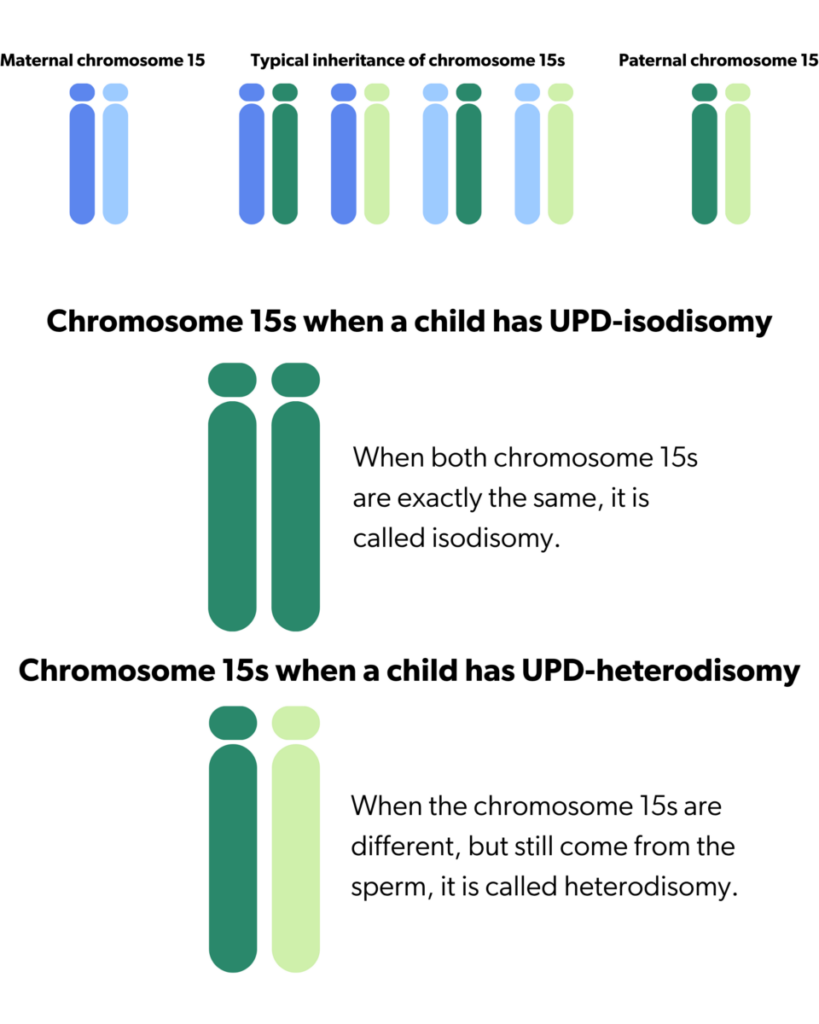
There are two different types of UPD, called heterodisomy (the two chromosomes from the sperm are different from each other) and isodisomy (the two chromosomes from the sperm are exactly the same). The type of UPD does not affect which symptoms of AS an individual has. However, it can affect the ability to get diagnosed, since some tests can only detect isodisomy.
Learn more about genetic testing for AS at Testing and Diagnosis.

Are there clinical trials for individuals living with UPD AS?
Each clinical trial has its own criteria for participating. Some trials are enrolling individuals living with UPD AS and some are not.
For potential therapeutics that aim to turn on the paternal UBE3A gene (like ASOs), researchers may need to consider differences between Deletion AS, where there is only one paternal copy of UBE3A to turn on, and UPD AS, where there are TWO paternal copies of UBE3A to turn on. This has sometimes led to early phase trials not including UPD AS.