Angelman Syndrome: Mosaic
This is the most rare genotype, affecting approximately 1% of individuals living with AS

What it means
Some cells are making UBE3A protein and some are not.

How common is it
Approximately 1% of individuals living with AS have Mosaic AS.

Is it inherited?
Usually no. In most families, it occurs randomly.
What is Mosaic AS?
Mosaic AS is a rare genotype. A person with Mosaic AS has a mixture of cells that make UBE3A and cells that do not make UBE3A in the body. This can also be called mosaicism. Most reported individuals have an estimated 5-20% of cells that make UBE3A, though people living with 1-40% of typical cells are reported.
A simple way to think about it.
Some of the body’s cells can make UBE3A, while other cells cannot.
Not enough UBE3A in the brain causes Angelman syndrome.
What can mosaic mean for my loved one?
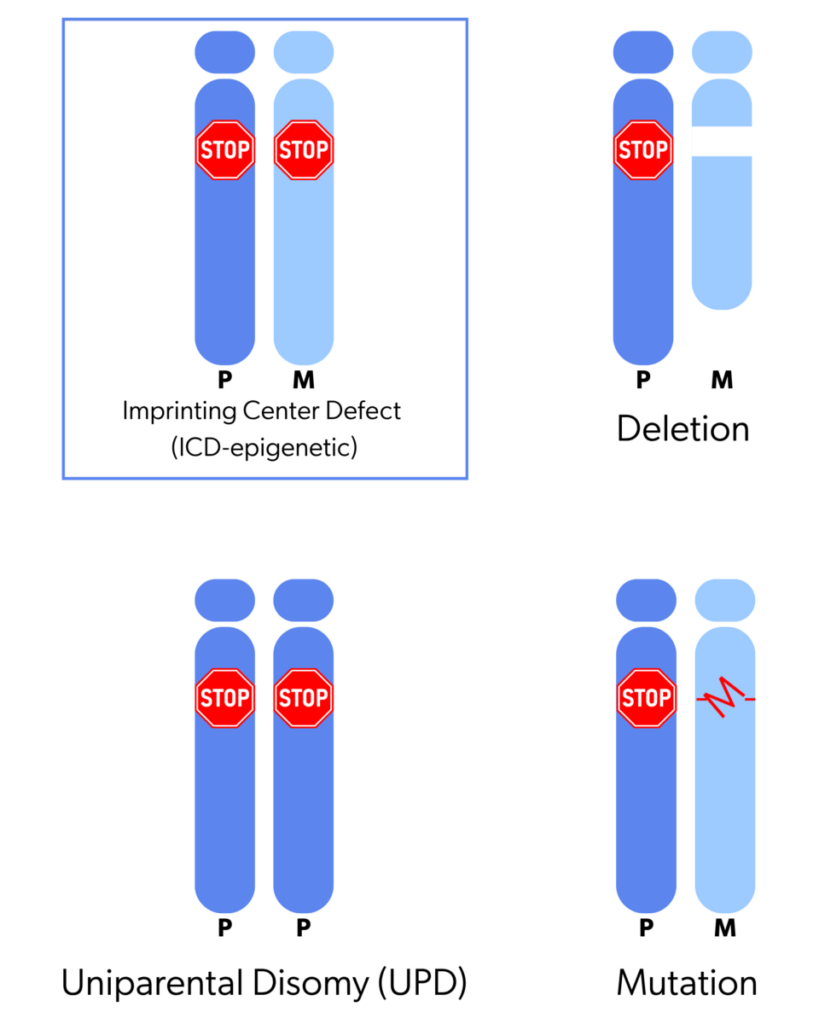
All individuals living with Mosaic AS have an underlying genetic cause: Deletion, Mutation, UPD or ICD.
Mosaicism is most often associated with ICD Epigenetic AS, but it has been reported with Deletion, Mutation, and UPD AS as well.
A 2004 study of individuals living with Mosaic Angelman syndrome showed that even a small amount of UBE3A may be linked to milder symptoms. People with more cells making UBE3A tended to have fewer symptoms, suggesting that potential treatments may not need to restore UBE3A to 100% in every cell to make a meaningful difference.
Questions about Mosaic AS?
FAST’s genetic counselor, Niki Armstrong, can help you obtain genetic testing or understand your test results.
Schedule a 1:1 AppointmentCould this happen again in our family?
Mosaicism typically occurs after conception, during the development of an embryo. It is not inherited, and the chance for a future child to have mosiacism for AS is predicted to be very low.
How do you test for Mosaic AS?
Mosaic AS can be identified on the standard genetic testing methods, although some testing methods are better at detecting mosaicism than others. In general, low levels of mosaicism are harder to detect.
Mosaicism is complicated because it can vary from tissue to tissue. For example, a person may have 5% of blood cells being typical, but that does not mean the cells in the brain or in the skin have the exact same percentages.
If a health care provider has a high suspicion for Mosaic AS, the provider may consider ordering a different genetic test that is better at finding mosaicism or ordering testing of a different sample or cell type. As an example, the provider might order testing on a skin sample if the past testing was on blood.
For questions about whether a genetic test report identified mosaicism or what to consider for additional genetic testing, reach out to FAST’s genetic counselor.

Are there clinical trials for individuals living with Mosaic AS?
Each clinical trial has its own criteria for participating. Historically, most clinical trials have not included individuals living with Mosaic AS. This is partially because individuals living with Mosaic AS may present a potential complication–a treatment might theoretically cause too much UBE3A to be made in the typical cells that are already making UBE3A. In people diagnosed as living with Mosaic AS, usually only a small percentage of cells (1-20% generally) are typical and making UBE3A. Given this low number, FAST believes this should not be considered a serious concern.
Another potential concern is that people living with Mosaic AS can have variable characteristics and symptoms, which may be related to what percentage of typical cells they have. Clinical trials are usually designed to limit variability, which means that more variable groups may not be included, especially in early stage trials.
FAST is fighting every day to make sure no genotype, not even our rarest, is left behind.
Explore Clinical Trials - Filter by underlying genetic cause: Deletion, Mutation, UPD, ICD.