
Angelman Syndrome: Mutation
UBE3A mutation is a genetic cause of Angelman syndrome, affecting about ~10% of individuals living with AS.

What it means
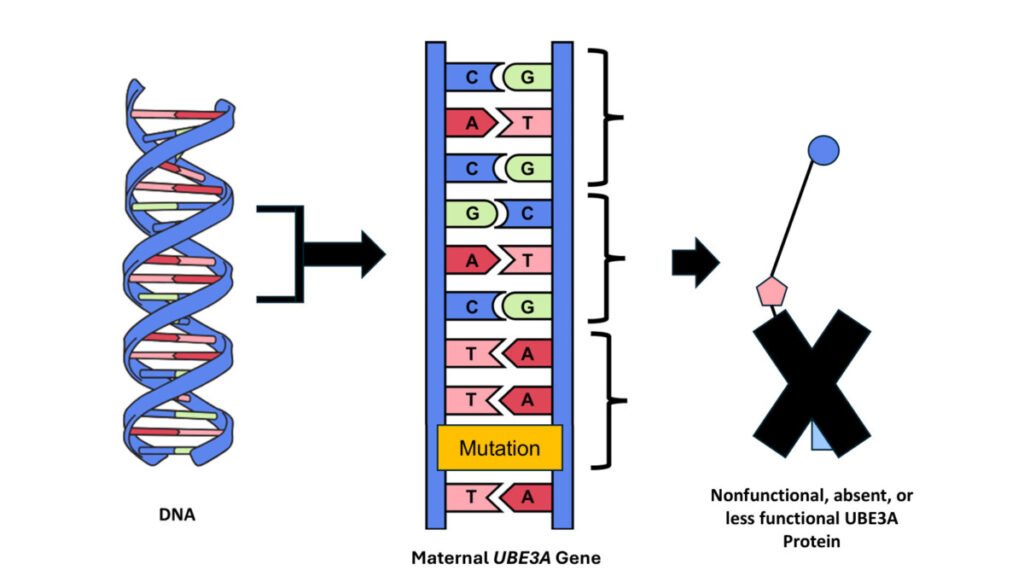
There is a genetic difference on the maternal copy of UBE3A gene

How common is it
About 1 in 10 individuals living with AS have Mutation AS

Is it inherited?
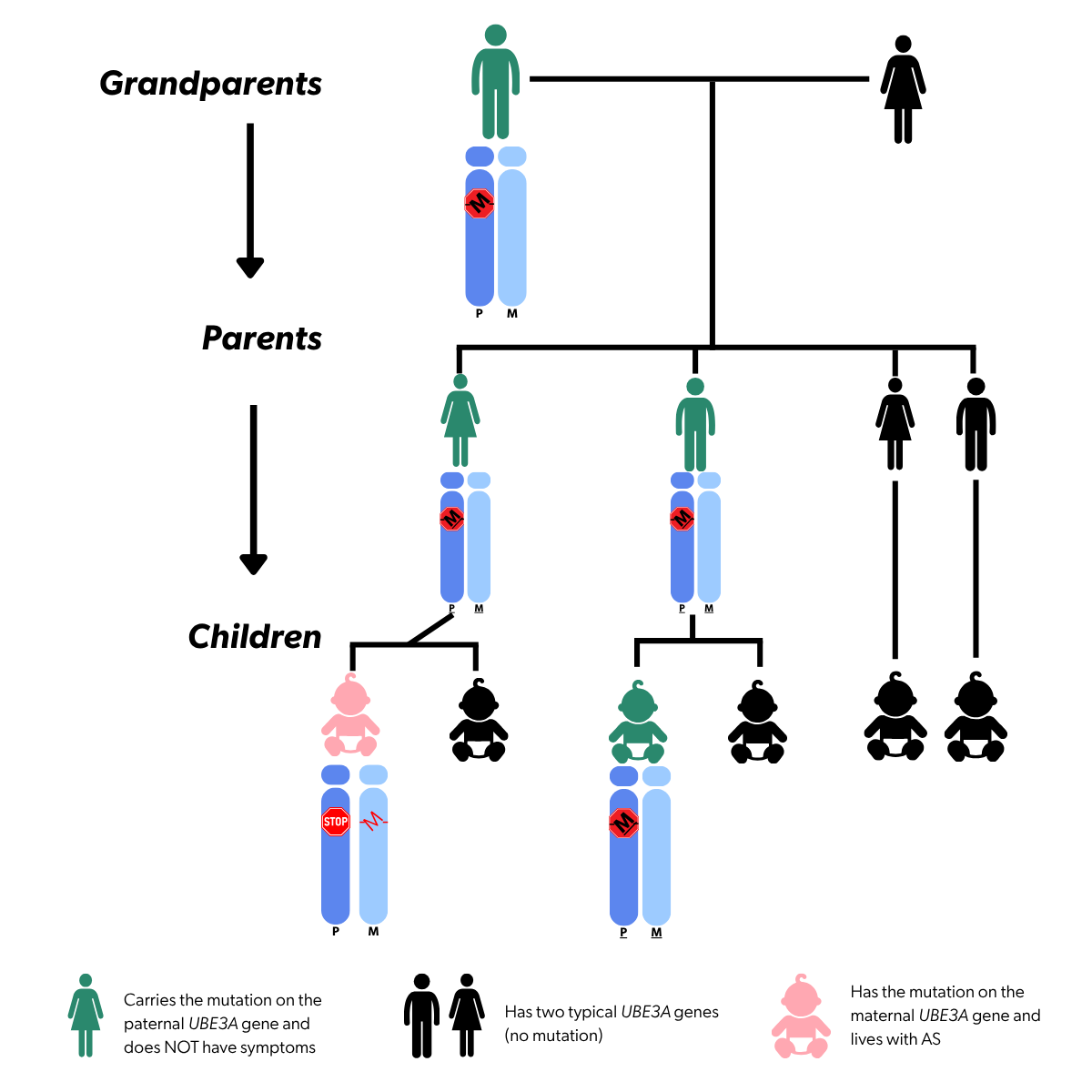
It may be new in the child or inherited from the mother
What is Mutation AS?
Some individuals live with AS because they have a difference within the UBE3A gene. As a reminder, a gene is an instruction to make a protein that the body needs. Each gene is made up of chemicals that form the DNA. The DNA chemicals are arranged in a very specific order that the cell reads to make the UBE3A protein. A difference in the DNA chemicals is called a mutation, also referred to as a variant.
A simple way to think about it.
One copy of the gene has a genetic difference. The other copy is naturally silenced in the brain.
That is why mutation of the maternal copy of UBE3A causes Angelman syndrome.
What can Mutation AS mean for my loved one?
Every individual who has a mutation in UBE3A is considered to have the Mutation genotype. However, the different types of variants and different locations of mutations within the UBE3A gene can affect the UBE3A protein in different ways, so there can be significant variability among individuals who are living with Mutation AS. New mutations are frequently identified and may be found in only one person or family.

Questions about Mutation AS?
The specific mutation information is typically contained in the genetic test report. FAST’s genetic counselor, Niki Armstrong, can help you obtain and understand it.
Schedule a 1:1 AppointmentCould this happen again in our family?
A UBE3A mutation can be new in an egg or person or it can be inherited from a mother who also carries the mutation. Consequently, testing the mother for the mutation is important.
Nothing a parent did or did not do before or during pregnancy caused this.
Maternal Testing for the UBE3A mutation
Negative: Mother does not have the UBE3A mutation. The UBE3A mutation randomly occurred during the formation of the egg and was NOT inherited.
Positive: Mother carries the UBE3A mutation
Chance for Mutation AS in future pregnancies is <1%
Chance for Mutation AS in each future pregnancy is 50%.
Other family members do NOT have an increased chance to have a child with Mutation AS.
Other family members may carry the mutation and have an increased chance to have a child or grandchild with Mutation AS. They may wish to consider UBE3A testing to understand their chances.
How the mutation can be passed down in the family
If the mother has the UBE3A mutation, each child has a 50% chance to inherit the UBE3A mutation and therefore have AS, and each child has a 50% chance to inherit the mother’s other UBE3A gene (which is functional) and not have AS. The mother herself does not have symptoms because the mutation is on her paternal UBE3A gene. If the mother has the mutation, her siblings and other relatives may also have the mutation. They may consider genetic testing to understand the chances for their children.

Are there clinical trials for individuals living with Mutation AS?
Each clinical trial has its own criteria for participating. Some trials are enrolling individuals living with Mutation AS and some are not.
Mutation AS as a genotype may be the most variable, because each mutation can affect the UBE3A protein differently. Researchers are working to understand each specific mutation’s effect on the protein and whether abnormal UBE3A proteins may require unique therapies. That understanding may be key for developing clinical trials and potential therapeutics for Mutation AS.
Keep Learning & Find Support
Genetics 101
Learn More
Newly Diagnosed
Learn More