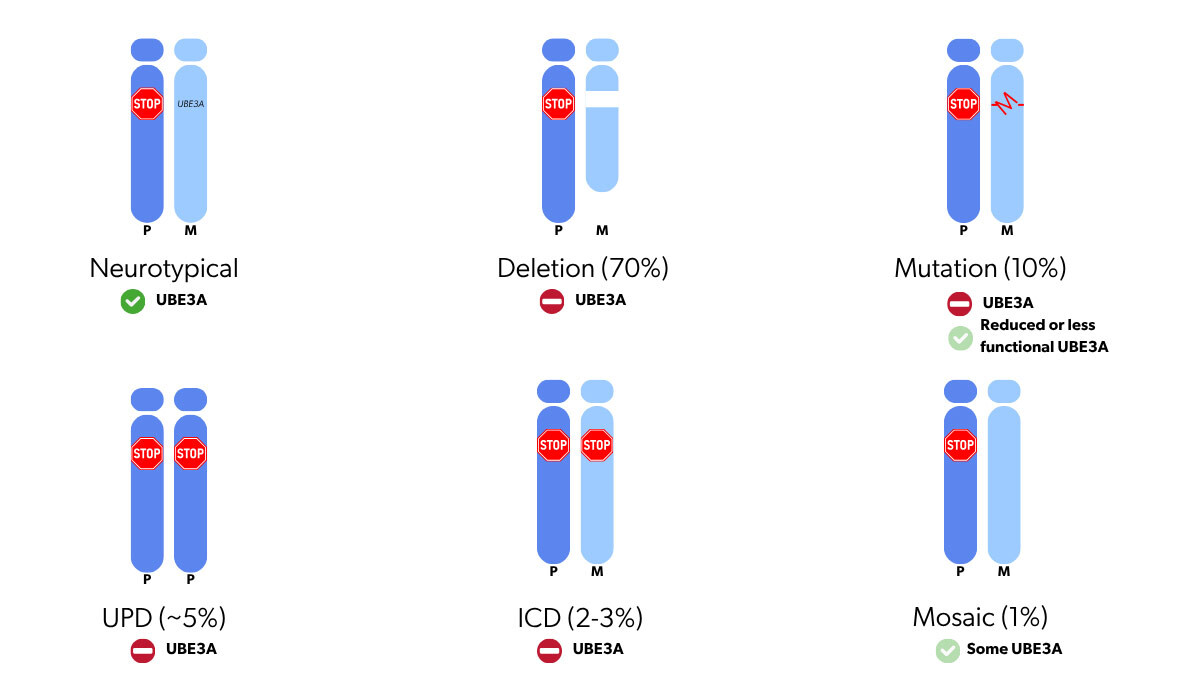
In most cells of the body, both maternal and paternal copies contribute to UBE3A protein production. In neurons, however, the maternal copy is the primary source of UBE3A protein. The paternal copy is typically silenced through a normal process called imprinting.
In Angelman syndrome, the maternal copy of UBE3A is missing, altered, or not functioning properly. Because the paternal copy is normally silenced in neurons, the brain does not produce enough functional UBE3A protein.
Angelman syndrome is unusual because a paternal copy of UBE3A is often present in neurons, even though it is naturally silenced. This creates an important opportunity for researchers studying ways to restore UBE3A function.